Lead Scoring That Sales Actually Trusts (2026 Working Model)
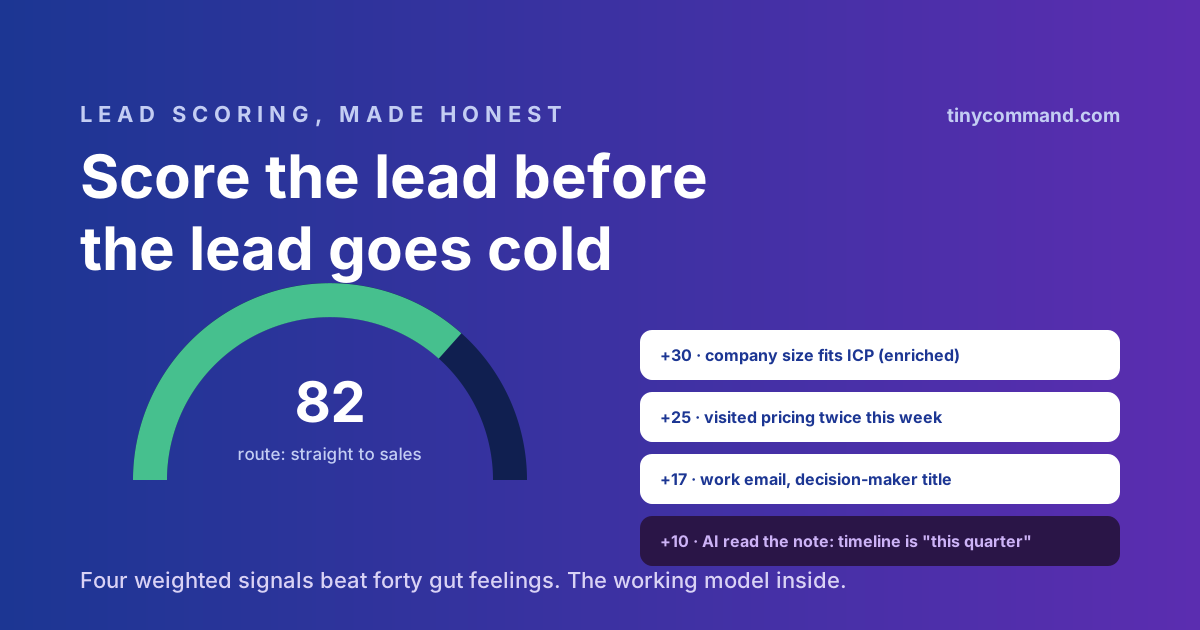
TL;DR: Lead scoring fails in two boring ways: models so complex nobody maintains them, and scores nobody routes on. The fix is a small model (four to six weighted signals across fit and behavior), an AI step for the judgement calls a rulebook cannot make, and hard routing rules so the score does something: above 70 pings sales now, 40 to 69 enters the nurture track, below 40 stays warm without wasting anyone's morning. Build it in an afternoon; tune it monthly against what actually closed.
Why score at all
Because speed beats persuasion. The team that calls a hot lead within minutes wins deals the better pitch loses a day later, and the only way to be fast on the right leads is to know which ones those are without a human reading every signup. Scoring is triage, not fortune-telling; its job is to spend your team's attention where the math says it pays.
The model: fit says who, behavior says when
Fit signals (does this look like our customer?):
- +30 · company size in your ICP band, filled by enrichment from the email domain, never by asking
- +17 · decision-maker title on a work email (free-mail domains score lower, not zero)
- +10 · industry you already win in
Behavior signals (are they shopping now?):
- +25 · pricing page visited twice in a week
- +15 · replied to a nurture email or booked-then-rescheduled (interest with friction)
- +10 · the free-text field mentions a timeline
That last one is where rules run out: "we are evaluating options for this quarter" and "just curious" are different leads wearing the same field. An AI step reads the note, scores intent with a one-line reason, and that reason rides along to sales, which is what makes reps trust the number instead of re-reading every form.
Routing is the whole point
A score without a consequence is a vanity column. Wire three rules in the workflow: 70 and above pings the right rep in Slack with the enriched context and the AI's reason; 40 to 69 lands in a nurture table that gets campaigns matched to their interest; under 40 gets the monthly newsletter and re-scores on every new signal, because behavior changes scores faster than fit does. The intake side of this machine is the same one from our client intake guide; scoring just adds the brain between capture and routing.
Tuning without a data science team
Monthly, pull the deals you actually won and look at their scores at first touch. Two questions: did any closed deal score under 40 (your model is blind to something they had), and did anything above 70 turn out junk (a signal is over-weighted)? Adjust one weight at a time. The model stays small because small models get maintained, and a maintained mediocre model beats an abandoned sophisticated one every quarter of the year.
Lead scoring FAQ
What is a good lead scoring model for a small team?
Four to six weighted signals split between fit (company size, title, industry) and behavior (pricing visits, replies, stated timeline), with thresholds that route: hot to sales immediately, warm to nurture, cold to a low-touch list. Small enough to tune monthly.
What is the difference between fit and behavior scoring?
Fit measures whether the lead matches your ideal customer and barely changes. Behavior measures buying intent right now and changes weekly. Score both: high fit with low behavior is a nurture lead, high behavior with low fit is a polite pass.
Can AI do lead scoring?
Best as the judgement layer, not the whole model. Deterministic weights handle the countable signals; an AI step reads free-text answers and ambiguous context, returns a score component with a stated reason, and a human-set rule still decides the routing.
What score should trigger a sales follow-up?
Whatever threshold your closed-won data supports, but start at 70 of 100 and demand the follow-up be fast: a hot lead pinged to Slack within a minute of submitting is the entire payoff of scoring at all.