Email Automation 101: Write Once, Convert Every Signup After (2026)
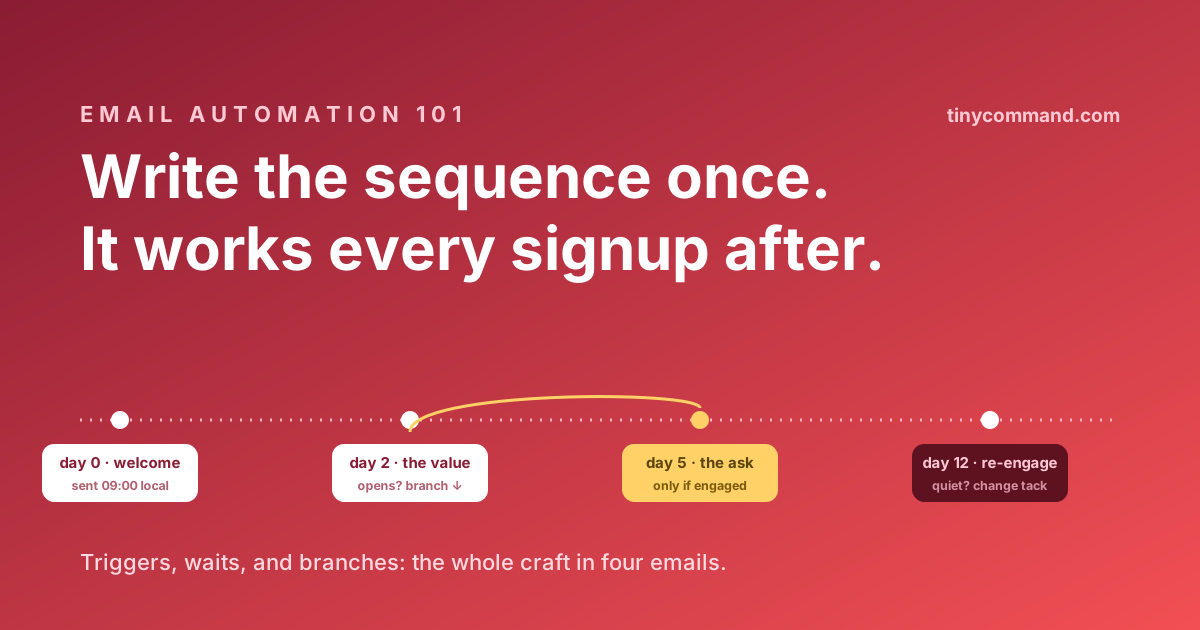
TL;DR: Email automation is three primitives composed: a trigger (signup, purchase, stalled trial), a wait (two days, not two minutes), and a branch (opened versus ignored). Four sequences cover most businesses: the welcome series, the nurture drip, behavior nudges, and re-engagement. Write them once with real branching and honest exits, and they outperform every one-off campaign you will ever send, because they arrive at the moment the recipient earned them.
The three primitives
Triggers start a sequence from an event: form submitted, first purchase, trial day three with no login. Waits create rhythm; the day-2 email exists because day-0 plus day-0 reads as spam. Branches are what separate automation from scheduling: opened the case study gets the pricing note, ignored it gets a different angle. A sequence without branches is a queue; with them, it is a conversation that adapts.
Sequence one: the welcome series
Day 0, deliver the thing and say who you are in two sentences. Day 2, the single most useful thing you know, no ask. Day 5, the ask, but only to people who engaged (the branch from the diagram above). Day 12, a change of tack for the quiet ones. Four emails, under 150 words each, written in one sitting; the small-team automation map ranks this the highest-ROI copy a team writes, and the math is just repetition.
Sequence two: the nurture drip
For leads that scored warm rather than hot (the scoring model decides), a weekly-ish cadence of genuinely useful content, with one rule that keeps it honest: every email must be worth reading by someone who never buys. Sales-pitch drips train people to archive you; useful drips keep permission alive until timing changes, and timing always changes.
Sequence three: behavior nudges
The trial stalled, the cart sat, the webinar ticket went unused. One trigger, one wait, one email with the specific unblock: the doc for the step they stalled on, the recording they missed. These convert best of everything in email because relevance is doing the persuasion. Keep them single-shot; a nudge that becomes a sequence becomes nagging.
Sequence four: re-engagement, with an honest exit
Ninety days quiet earns the "should we stop?" email. The unsubscribe-me option in that email is not a loss; on contact-billed tools like Mailchimp or Klaviyo it is literally a refund, and on any tool it protects the deliverability that makes the other three sequences land in inboxes at all.
The mechanics that make it humane
Merge real data beyond the first name: the plan they chose, the form answers they gave. Send in the recipient's morning. Cap total frequency across sequences so a busy lead does not get three robots in one day. On Tiny Command a workflow sends an email the moment a trigger fires and TinyCampaigns broadcasts straight to your tables, so "signed up but stalled at step 2" is a filter on live data rather than a CSV export; multi-day sequences with waits aren't part of it today. Flat pricing, no per-contact meter; the comparison lives on the pricing page.
Email automation FAQ
What is the difference between a drip campaign and email automation?
A drip is the simplest automation: fixed emails on a fixed schedule. Full automation adds triggers from behavior and branches on engagement, so the sequence adapts per recipient instead of marching everyone through the same queue.
How many emails should a welcome sequence have?
Three to five over about two weeks: deliver, teach, ask, and a tack-change for the unengaged. Under 150 words each. Past five, returns fall and unsubscribes climb.
What email automation should an online store run first?
The abandoned-cart nudge, then the welcome series, then post-purchase follow-up. Cart recovery converts highest because intent was explicit; the welcome series compounds longest.
How do I automate emails without per-contact pricing?
Use a sender that reads from your own database instead of billing your audience size. TinyCampaigns sends to a list that lives in your own TinyTables, on plans priced by credits and seats rather than by contact count.