No-Code Databases (2026): Where Spreadsheets End and Databases Begin
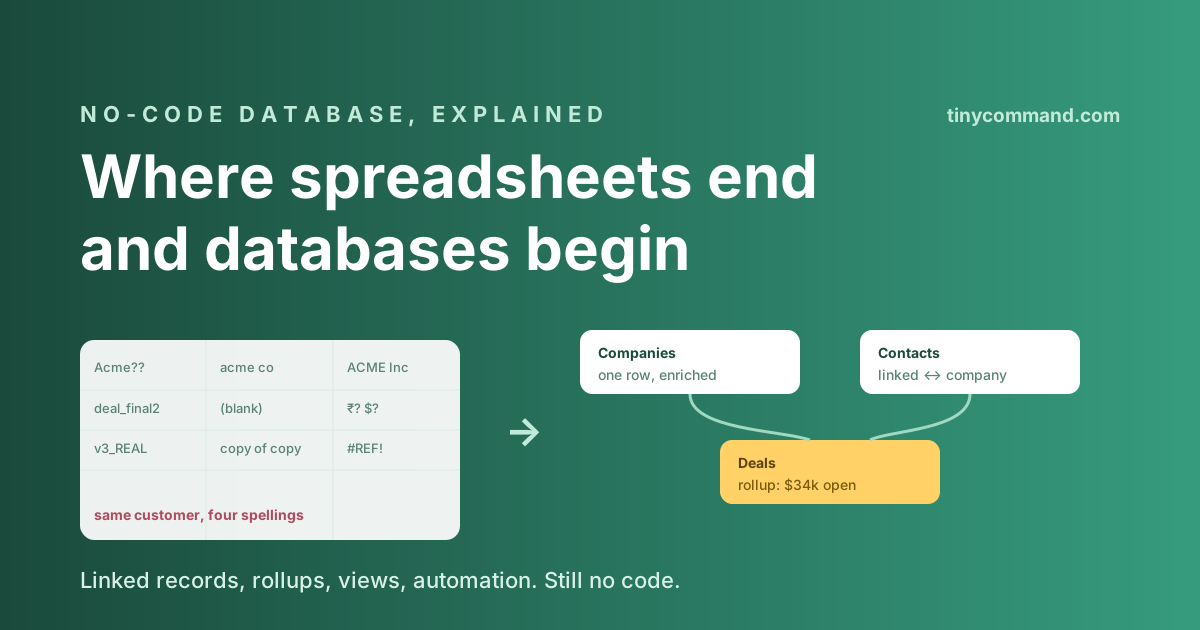
TL;DR: A no-code database gives you what programmers get from a real database (one record per thing, relationships between tables, views over the same data) with a spreadsheet's learning curve. The tell that you need one is repetition: the same customer typed in four places, the same list copy-pasted into three tabs, a formula breaking every time someone sorts. Below: what actually changes, the five outgrowing signs, and the honest buying criteria including the pricing traps.
The one idea that changes everything: a record, not a row
In a spreadsheet, "Acme Corp" is text that happens to appear in fourteen cells, and every appearance is a chance to spell it differently. In a database, Acme is one record that other tables point to. Rename it once and every deal, contact, and invoice linked to it updates, because they were never copies, only references. Everything else (rollups, views, clean automation) falls out of that single idea.
What you get above a spreadsheet
- Linked records. Contacts belong to companies; deals link both. The hero image's "same customer, four spellings" problem becomes structurally impossible.
- Rollups and lookups. The company row shows the sum of its open deals without a fragile cross-tab formula.
- Typed fields with real validation. Emails, currencies, dropdowns, files. Type a word into a number field and the database refuses politely.
- Views over one truth. The same deals table is a kanban for sales, a calendar for renewals, and a filtered grid for the founder. Three views, zero copies.
- Automation that can trust the data. "When stage becomes Won, send the kickoff email" only works when stage is a field, not a cell someone might type "won!!" into.
The five signs you have outgrown the sheet
1. The same entity lives in multiple tabs and they disagree. 2. There is a cell whose formula nobody dares touch. 3. "Final_v3_REAL" is a filename in your workspace. 4. Someone asks for the same data sliced differently and the answer is a new copy. 5. You want anything automated and realize the sheet cannot be trusted as a trigger. Two or more of these is the threshold; all five is overdue.
Choosing one, including the pricing traps
The capability bar: linked records, 20-plus field types, multiple views, API access, and automation hooks. Then the economics, which is where the category bites: the best-known option bills per editor with record caps per base, so the bill tracks your headcount and your data growth at once. Self-hosting via NocoDB trades that for server maintenance. TinyTables takes the flat path: 30-plus field types, linked records, kanban and calendar views, with two additions the standalone tools lack: enrichment inside the table (a domain fills the company row by itself) and the same canvas as workflows and forms, so the database is the live source the automation reads, not an island. $49 flat for the stack; comparisons at vs Airtable name where the incumbent still wins.
The first build that proves the point
A lightweight CRM: companies, contacts, deals as three linked tables, a kanban on deal stage, one workflow nudging stale deals. An afternoon's work, and the difference from the spreadsheet it replaces becomes the argument no blog post can make for you.
No-code database FAQ
What is a no-code database?
A database (one record per thing, relationships, typed fields, multiple views) operated through a visual interface instead of SQL. You get the structural integrity programmers rely on with the approachability of a spreadsheet.
When should I switch from a spreadsheet to a database?
When repetition appears: the same entity typed in several places, copies disagreeing, formulas nobody dares touch, or any wish to automate from the data. Two or more of those signs and the switch pays back within weeks.
What is the difference between Airtable and a spreadsheet?
Airtable-style tools add linked records, typed fields, views, and automation hooks to the grid. The structural difference: a record exists once and is referenced, while a spreadsheet duplicates text in every cell that mentions it.
Is there a no-code database without per-seat pricing?
Yes. TinyTables runs inside Tiny Command's $49 flat plan with enrichment built in and no per-editor billing, against per-seat tools where every collaborator with edit rights raises the bill. Self-hosted options like NocoDB are flat too, at the cost of running your own server.