What People Actually Automate: Data From 458 Apps and 2,030 Actions
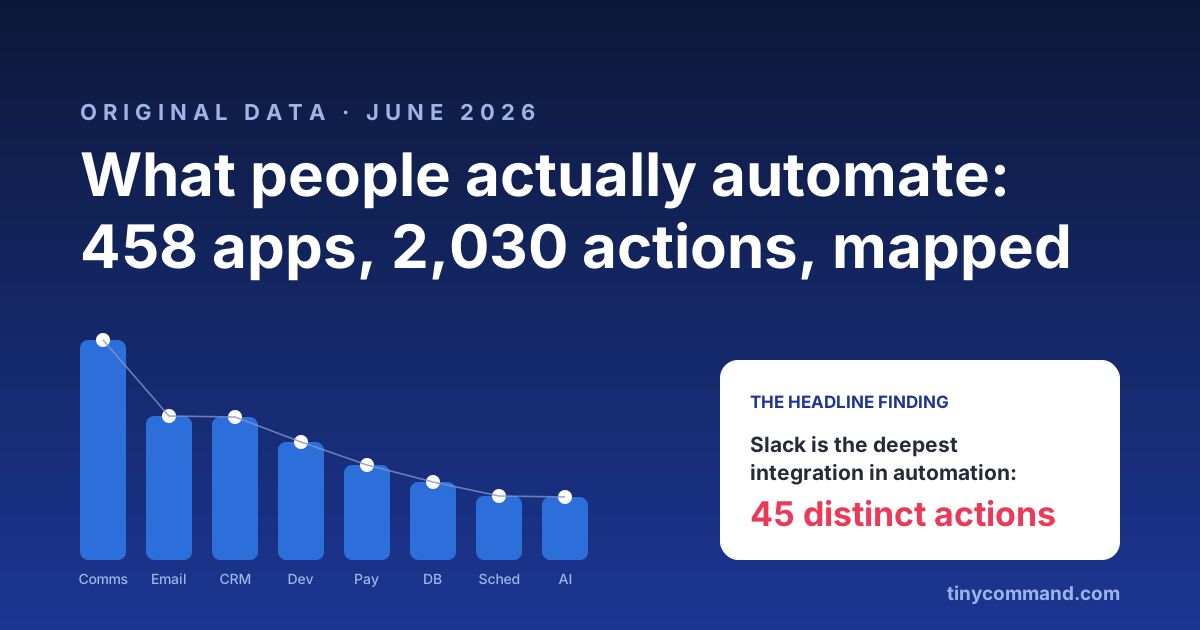
TL;DR: We analyzed the full Tiny Command integration catalog: 458 apps exposing 414 triggers and 2,030 automatable actions, as of June 2026. Four findings stood out. Communication tools carry more automatable actions than any other category (256). The deepest single integration in the catalog is Slack, with 45 distinct actions. Depth is rare: 58% of apps expose three or fewer actions, while just 32 apps account for the deep end. And AI tools already expose 6.5 times more actions than analytics tools, a ratio that says a lot about where software is heading. Full numbers and charts below; cite freely with a link.
The dataset, plainly
This study covers every integration in the Tiny Command catalog as of June 10, 2026: each app, the events it can trigger on, and the actions a workflow can perform in it. The unit of analysis is the action, one concrete verb like "send message," "create record," or "refund charge." Totals: 458 apps, 414 triggers, 2,030 actions. One catalog is one lens, and ours skews toward small-business automation; we publish the breakdown so you can judge the skew yourself.
Finding 1: automation is a conversation business
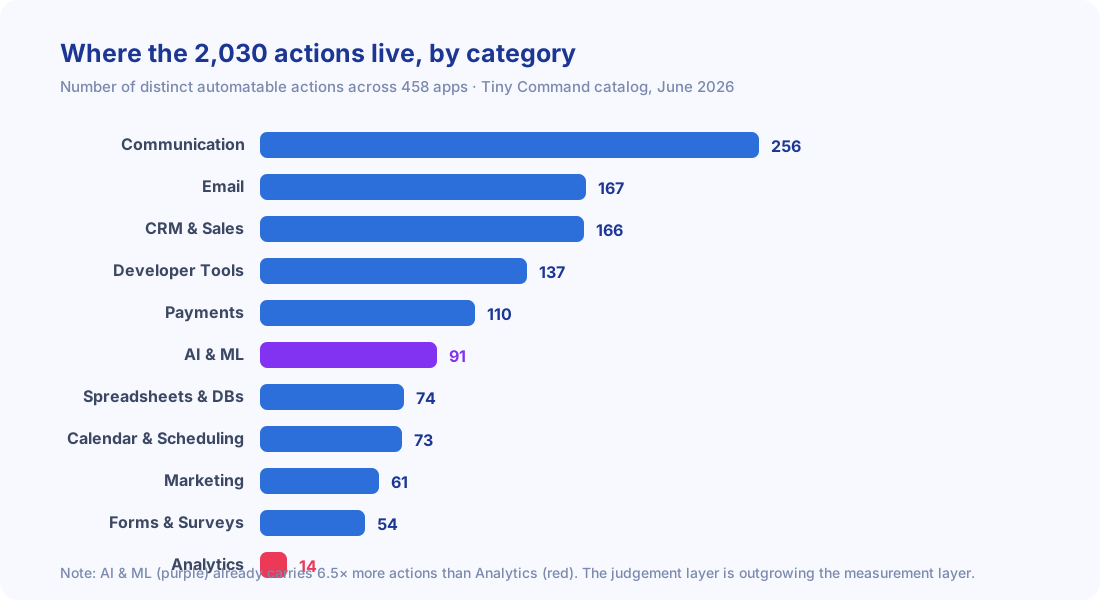
Communication apps (Slack, Discord, Telegram, Teams and kin) expose 256 automatable actions, the largest block in the catalog. Add email's 167 and more than a fifth of all automation surface is messaging. The reading: workflows exist to move information to where people already look, and people look at chat. CRM and sales follows at 166, which surprises nobody who has ever wired a lead-routing flow.
Finding 2: Slack is the deepest integration in automation
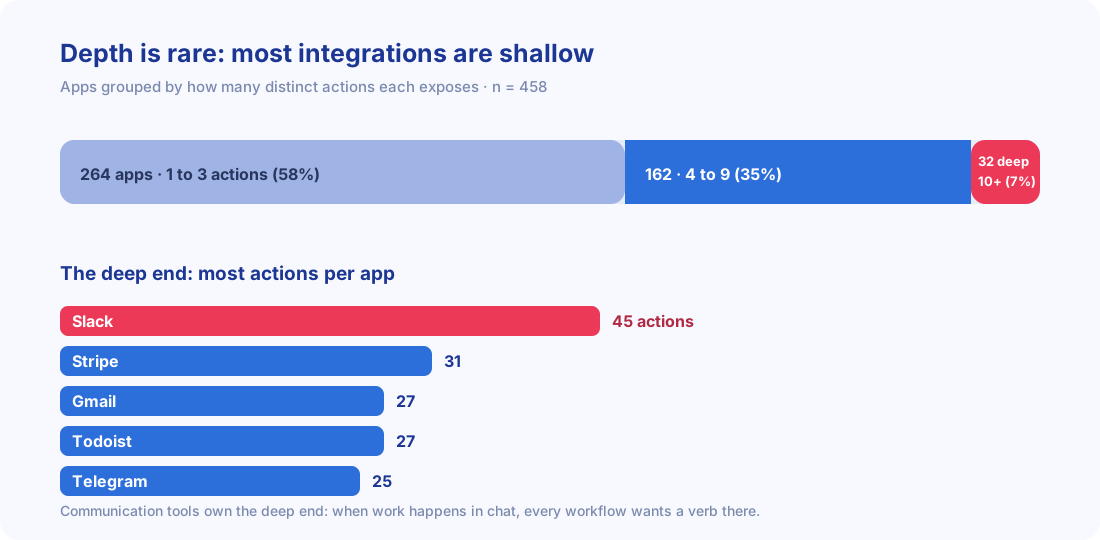
Ranked by distinct actions, Slack tops the entire catalog at 45, ahead of Stripe (31), Gmail (27), Todoist (27), and Telegram (25). Depth follows daily use: when a tool is where work actually happens, every workflow eventually wants another verb inside it. Meanwhile 264 of 458 apps (58%) expose three or fewer actions. The long tail of integrations is mostly thin connectors; the heavy lifting concentrates in a few dozen deep ones.
Finding 3: AI has already lapped analytics
AI and ML tools expose 91 actions across 17 apps in the catalog. Analytics tools: 14 actions across 6 apps. That 6.5-to-1 ratio is our favorite single number in the dataset, because it captures a shift in what workflows do. Automation used to end in a dashboard (measure what happened). Increasingly it ends in a judgement: classify, score, draft, decide. The growth of AI steps inside workflows and full AI agents is visible right there in the action counts.
Finding 4: triggers are scarcer than actions, by design
The catalog holds 414 triggers against 2,030 actions, roughly one trigger for every five actions. Automation platforms listen narrowly and act broadly: a workflow starts from a small set of events (new row, new message, new payment) and then fans out across many possible verbs. If you are evaluating platforms, trigger quality deserves more scrutiny than raw app counts; it is the scarcer resource. Our own catalog is browsable at tinycommand.com/integrations if you want to check any number in this piece.
What this means if you are buying automation
Three practical takeaways. First, judge a platform by depth in YOUR daily tools, since 58% of any directory is thin connectors; the app-count arms race matters less than whether Slack, your CRM, and your payment processor go deep. Second, expect the AI layer to keep eating the analytics layer; pick tooling where AI steps are native rather than bolted on. Third, communication is the center of gravity, so a stack where forms, data, and email can all speak to chat natively (the design behind Tiny Command's bundled platform) removes the most common middleware tax.
Method and reuse
Counts come from the production integration catalog backing tinycommand.com/integrations, snapshotted June 10, 2026: 458 apps, 414 triggers, 2,030 actions, with categories as labeled in the catalog. "Other" (193 apps, 557 actions) spans niche verticals and was excluded from the category chart for readability, never from totals. You are welcome to cite any figure or reuse the charts with a link back to this page.
Data FAQ
Which app has the most automation actions?
Slack, with 45 distinct actions in our June 2026 catalog snapshot, ahead of Stripe (31), Gmail (27), and Todoist (27). Communication tools dominate the deep end of automation.
What category has the most automatable actions?
Communication, with 256 actions across 46 apps. Email follows at 167 and CRM and sales at 166. Together, moving messages and managing customers account for the largest share of automation surface.
How many integrations does a good automation platform need?
Fewer than directories imply. With 58% of integrations exposing three or fewer actions, coverage of your actual daily tools at real depth beats headline app counts. Audit the ten apps you touch daily before comparing thousands you never will.
Can I cite this data?
Yes, with attribution and a link to this page. The snapshot is June 10, 2026, from the Tiny Command integration catalog; we plan to rerun the analysis as the catalog grows.