Zapier Pricing Explained (2026): Tasks, Tiers, and the Real Math
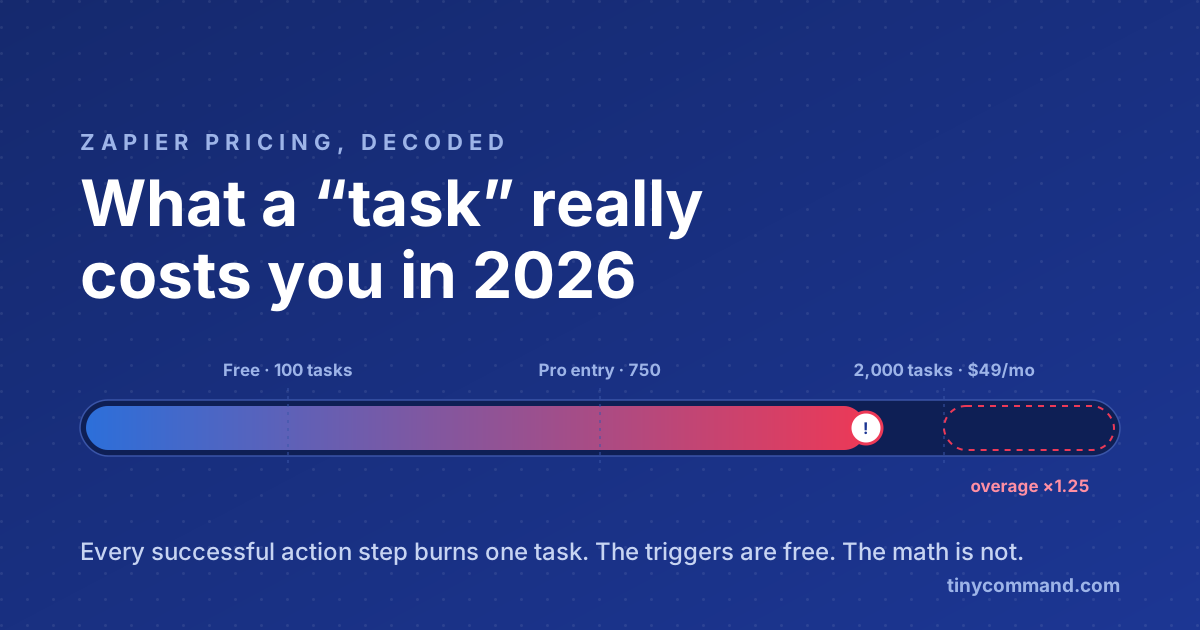
TL;DR: Zapier charges per task, and a task is one successful action step. Triggers and filters are free. The Free plan gives you 100 tasks and two-step Zaps; the Professional plan starts at $29.99 a month for 750 tasks and reaches $49 a month (billed yearly) for 2,000. Most teams underestimate their task burn by 3 to 5 times, because one Zap run usually costs several tasks. The fix is either buying a bigger tier than feels necessary, or moving to flat-rate automation. We did the math for both below.
What you are actually buying: tasks, not Zaps
Zapier's pricing page leads with plan names, but the only number that decides your bill is the task. One task is one action step that executes successfully. The trigger that starts a Zap costs nothing. Filters and basic formatting steps cost nothing. Everything else does.
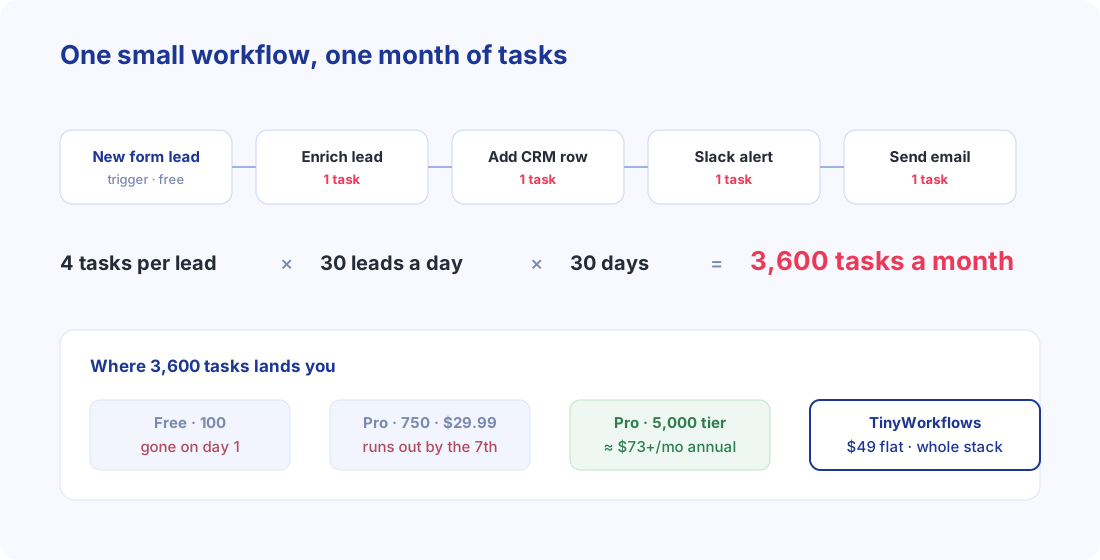
That sounds generous until you remember what real automations look like. Almost nothing useful is a two-step Zap. A typical lead-routing flow enriches the lead, writes it to a CRM, posts to Slack, and sends an email. That single run is four tasks, and it happens every time a lead arrives.
Zapier plans in 2026, with the numbers that matter
| Plan | Price (annual billing) | Tasks / month | The fine print |
|---|---|---|---|
| Free | $0 | 100 | Two-step Zaps only, 15-minute polling, no premium apps |
| Professional (entry) | $29.99/mo | 750 | Unlocks multi-step Zaps, webhooks, premium apps |
| Professional (2k tier) | $49/mo, or $73.50 billed monthly | 2,000 | Same features, bigger meter. Task tiers scale up from here |
| Team | from $103.50/mo | shared pool | Shared workspaces, unlimited users, premier support |
| Enterprise | custom | custom | Annual contract, SSO, advanced admin |
Two details on that table deserve a second look. First, the gap between annual and monthly billing on the same tier is large: the 2,000-task Professional tier is $49 a month if you commit for a year and $73.50 if you pay monthly, a 50% premium for flexibility. Second, the entry Professional price you see in ads ($29.99) buys 750 tasks. Teams that picked it for the price usually discover within two weeks that they bought the wrong meter.
The worked example: a small lead funnel
Take a business that captures 30 leads a day and runs the four-step flow from the diagram above. The math is short and a little brutal.
- 4 tasks per lead × 30 leads × 30 days = 3,600 tasks a month
- The Free plan covers the first morning of the month, then stops.
- The $29.99 Professional tier runs out around day 6.
- You need the 5,000-task tier, which lands around $73 a month on annual billing.
Then growth happens. Double the leads and you need 7,200 tasks; the meter chases you upward through every win. This is the structural complaint about per-task pricing: your bill scales with your success, not with the value you get per run. The flow did not get smarter at 7,200 tasks. It just ran more often.
The three places Zapier bills surprise people
1. Overage multiplies the rate. Go past your monthly limit and Zapier keeps running your Zaps, billing extra tasks at 1.25 times your plan's per-task rate, up to a hard stop at 3 times your included volume. A busy month does not pause your automations. It inflates the invoice.
2. Retries and loops count. Steps that run inside loops burn one task per iteration. A digest Zap that loops over 50 rows is 50 tasks, not one. People audit their Zap count and feel safe; the meter only cares about executions.
3. The Free plan is a demo, not a tier. Two-step Zaps with 15-minute polling rule out almost every real workflow. It exists to teach you the editor, and it is genuinely good at that. Budgeting around it is the mistake.
When Zapier is honestly worth it
Fairness matters here, because the product is excellent at what it is. Zapier connects around 8,000 apps; nobody else is close, and if your stack includes a rare tool, Zapier probably reaches it. The editor is the most beginner-friendly in the category. And for low-volume, high-value automations, say 20 runs a month that each save an hour, per-task pricing is actually cheap. If that describes you, stay. Our own TinyWorkflows vs Zapier comparison says exactly that in the places Zapier wins.
The flat-rate path, if the meter is the problem
If your complaint is the meter rather than the product, you have two directions. Self-hosters move to n8n and trade money for maintenance time (our n8n vs Zapier breakdown covers when that trade makes sense). Teams that want hosted simplicity consolidate: TinyWorkflows runs automation on credits, one per step, inside a $49 flat plan that also includes the forms, database, AI agents, and email most Zaps are glueing together in the first place. The funnel above is 900 runs a month here, roughly 13 credits each once the company look-up (10 credits) is counted, so about 12,000 credits: well inside the plan's 50,000, even when your lead volume doubles. The full math sits on our pricing page, and the Zapier alternatives roundup compares nine options honestly if you want the wider view.
Zapier pricing FAQ
How much does Zapier cost per month?
Free for 100 tasks. The Professional plan starts at $29.99 a month for 750 tasks and steps up by volume; the popular 2,000-task tier is $49 a month billed annually or $73.50 billed monthly. Team plans start around $103.50 a month with pooled tasks.
What counts as a task in Zapier?
Every action step that executes successfully. Triggers, filters, and built-in formatters are free. A five-step Zap with one trigger and four actions costs four tasks per run, and looped steps cost one task per iteration.
Is the Zapier free plan enough for a small business?
Rarely. The 100-task cap and the two-step limit rule out multi-step workflows, which is most of them. It is a good sandbox for learning the editor before you pick a paid tier.
What happens if I go over my Zapier task limit?
Your Zaps keep running. Extra tasks bill at 1.25 times your plan's effective rate, capped at three times your included volume, after which Zaps pause until the next cycle. Watch for it on month two of any growth spurt.
What is the cheapest Zapier alternative with flat pricing?
For hosted tools, TinyWorkflows includes automation in a $49 flat plan covering the whole stack (forms, tables, AI agents, email). Self-hosted n8n is cheaper still in cash terms if you are happy running your own server. Sources for the numbers above: Zapier's official pricing page, June 2026.